When and how did you learn about what it does and doesn’t mean to be White?
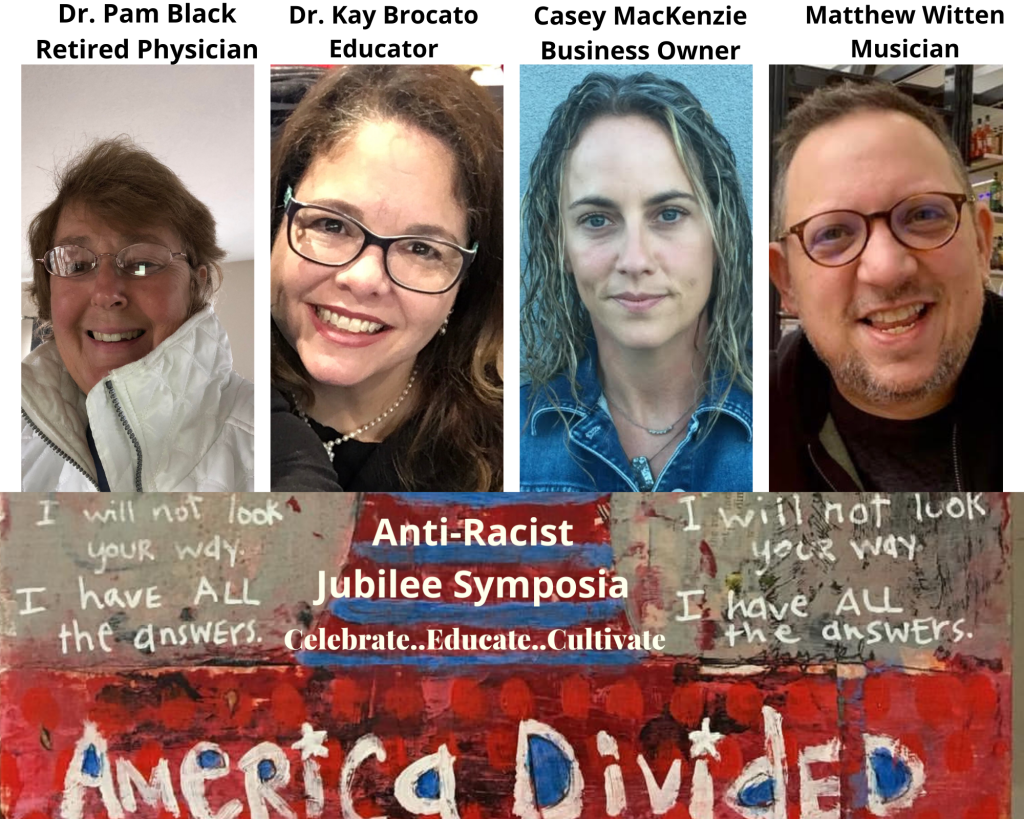
Procedures for guiding this discussion on self-reflection/ racism/ anti-racism. (March 21, 2021)
- Breakout Room Leader(s) – Please be clear and open about the purpose of the conversation before and during the conversation.
- We’re here today to self-reflect, as white people from diverse backgrounds, and experiences, in a white majority culture while living and working in spaces that are increasingly multi-ethnic and multi-cultural.
- There are a lot of pieces and parts connected with those spaces, and we will ‘deep dive” and talk about as many of those parts as time allows.
- We’re here to have open, honest, non-judgmental conversations about what each of us can do to begin the process of dismantling racism. However, the best place to begin the process is with ourselves, with understanding more about what really makes us who we are.
- Breakout Room Leader(s)
Set ground rules for respectful conversations.
- Active listening is a must. Please do not interrupt or talk over others.
- Do your best to keep your comments concise and relevant to the question you are answering.
- Be conscious of sharing airtime with other participants.
- Recognize and acknowledge people’s experiences. The person/people you are listening to or in conversation with are bringing their own perspective, shaped by their own experiences (culture, history, practices, upbringing)
- Dismantling racism is not a checklist, a one-time meeting, or a one-time commitment. It is an ongoing awareness of how we show up in the world for the good of everyone.
- This is a beginning. Today, we will make small, realistic, challenging commitments to grow, learn and evolve.
C. Breakout Room Leader(s)
Let’s begin the conversation!
- Each participant has 1 minute to introduce themselves.
- They are to briefly share their name, where they live, and if this is their first conversation related to dismantling racism with only white people leading the discussion.
D. Breakout Room Leader(s) Set the Context.
Bring people into the conversation by setting the context. Included here are questions to answer and set the context of the discussion.
- What is happening now that makes this conversation about racism/anti-racism important?
E. Breakout Room Leader(s)
General Self-Reflective Questions
- What feelings, thoughts, reflections are you holding in this moment? For yourself? Your family? Your community?
- What aspect of your ethnicity makes you the most proud?
- Does ethnicity enter in your process of making important or daily decisions? If so, how?
Be empathetic! Seek responses….Don’t linger on one point too long! Keep the focus.
F. Breakout Room Leader(s) Transition:Family
- Are your parents from the same ethnic group? Are your brothers and sisters? What about your extended family — uncles, aunts, etc.?
- Where did your parents grow up? What exposure did they have to ethnic groups other than their own? Have you ever talked with them about this?
- What ideas did they grow up with, regarding “race” relations? Again, do you know?
- What messages do you recall getting from your parents about “race”? From others when you were little?
- Do you think of yourself as white or as “human”?
- Do you think of yourself as a member of an ethnic group? What is its importance to you?
Be empathetic! Seek responses….Don’t linger on one point too long! Keep the focus.
G. Transition to Neighborhood
- What is the ethnic makeup of the neighborhood you grew up in?
- Is there anyone here who hasn’t heard the “N” word? Where did you first hear it?
Seek responses….Don’t linger on one point too long! Keep the focus.
H. Breakout Room Leader(s)
Transition to Elementary and Middle School
High School.
- What was the ethnic makeup of your elementary, middle and high schools? Of its teachers? Your friends?
- Think about the curriculum: What Black Americans did you hear about? How did you celebrate Martin Luther King Day?
- Cultural influences: TV, advertising, novels, music, movies, etc. When people talked about God, Angels Santa Claus The tooth fairy, and Dolls, what color were they?
- What was the ethnic demographic of the organizations you were in? Girl Scouts, soccer team, church, cheer squad, debate team, choir etc.?
Be empathetic! Seek responses….Don’t linger on one point too long! Keep the focus.
I. Breakout Room Leader(s)
Transition to The Community
Lessons in Being White
- What is the ethnic makeup of your home town?
- What are your thoughts on interracial dating/marriage? Do you use racist slurs? Any conflict with members of another ethnicity?
- Have you ever felt or been stigmatized because of your ethnicity?
- When was the first time you realized you were white?
- When was the first time you realized you might be treated differently because you have white skin?
- When was the first time you realized people of other ethnic identity groups are treated differently?
- What were the messages you heard growing up about white people? African Americans? Latinos/as? Native Americans? Asian Americans? Pacific Islanders?
- Look at your friends, family, colleagues, key professionals or service people (doctor, dentist, lawyer, counselor, handyman, etc.)—what are their ethnic identities?
- How and why did you choose to know or work with these people?
- To which ethnic groups do the people you socialize with regularly belong?
Be empathetic! Seek responses….Don’t linger on one point too long! Keep the focus.
Thank them for their time. Bring closure. Select one/two peolple to debrief in the large group. Invite each person to attend our next session, on April 25.
There will be a call to action plan/homework, in the large group, before we adjourn.
Follow-up Actions ….End of Session with Evelyn in large group room
- Ask people to share what they learned about themselves or what is their one takeaway from the conversation.
- During the presidential election,2020, many of us called and interacted with voters in Georgia, specifically, and elsewhere! The underlying question that we asked and message that we shared was, do you have a plan! Will you call others and ask them if they have a plan to vote.
- Let’s consider that analysis, in conjunction with what we’ve talked about and learned today!
- We’ve listed a number of resources for you to read, and study!
- According to Ibram X Kendi, in his book, ‘How To Be An Anti-racist,he says,” Being Anti-Racist is a verb. It requires action, every day.
- We must listen. We must read. We must learn- Then we are in action.” It’s time for you to make a plan of action to help you fight racism.
- It is so important that you start this journey with your very best intentions.
- Your plan of action should be to stop all behaviors that perpetuate white supremacy and to encourage others to start the process of doing the same. That’s it.
- Anything else is performative. You should also be creating a routine for this work and hold yourself accountable to it.
- Start your own personal racial autobiographies:
- You’ve read articles, books, attended webinars, Zoom meetings, etc.
- This is the real “self-work” of antiracism. Write your personal narrative.
- (Note: be sure to focus on the experience of your own race, as well as others’ race).
- What were your feelings about this discovery?
- What were your thoughts? Beliefs? Emotions? Actions?
Finally, I want to encourage you to begin building a vocabulary of terms, to help you better understand the system of racism/anti-racism.
- Racist: According to Ibram X Kendi, “ One who is supporting a racist policy through their actions of inaction or expressing a racist idea.”
- Antiracist: According to Ibram X Kendi, “ One who is supporting antiracist policies “through their actions or expressing an antiracist idea.”
DEFINE KEY TERMS Write these terms.
https://www.youtube.com/@antiracistconversations4293
- Bias
- Caste
- Disparate impact
- Hierarchy
- Marginalized
- Race
- Racism
- Privilege
- Stereotypes
- Stigma
- Systemic racism
 AntiRacist.Conversations (Uncover the Facts). Celebrate.Educate.Cultivate
Leave a comment